If you’ve been told you don’t have enough bone for dental implants, you’re not alone. It’s one of the most common things we hear from patients walking into our Virginia Beach dental practice.
Maybe another dentist said it years ago. Maybe you read it somewhere and assumed it applied to you. Or maybe you’ve been living with dentures because someone told you implants just weren’t an option.
The truth is, “not enough bone” is a starting point, not a final answer. Modern implant techniques, including angled implants and All-on-4 in Virginia Beach, have changed what’s possible for patients who were once turned away. Let’s break down why.
Why Bone Loss Happens in the First Place
Your jawbone stays strong because it gets constant stimulation from your tooth roots. Every time you bite or chew, those roots send signals that tell the bone to rebuild itself. It’s a use-it-or-lose-it system.
When you lose a tooth, that stimulation stops. The bone in that area starts to shrink. It doesn’t happen overnight, but over months and years, the change can be significant. If you’ve been missing teeth for a while, especially several in a row, you’ve likely lost bone without realizing it.
This is why tooth loss is about more than appearance. It triggers a chain reaction that affects your bite, face shape, and ability to eat comfortably.
The Old Rule: One Implant, One Tooth Root, Plenty of Bone
For years, the standard approach to implants followed a simple rule. Each missing tooth needed its own implant. Each implant needed a certain amount of bone height and width to sit securely. If you didn’t have that bone, you needed a graft before anything else.
That rule made sense then. But it left many patients stuck. Grafting adds months to treatment, costs more, and isn’t always successful. Some patients were told they simply weren’t candidates.
The Modern Shift: Angled Implants Use the Bone You Still Have
Here’s where things changed. Instead of placing every implant straight down, skilled implant dentists began placing them at angles. This opened up possibilities for patients who’d been told no.
The front of your jaw naturally holds more bone than the back, even after years of tooth loss. The back of the jaw is where sinuses and nerves get in the way, and where bone tends to shrink fastest.
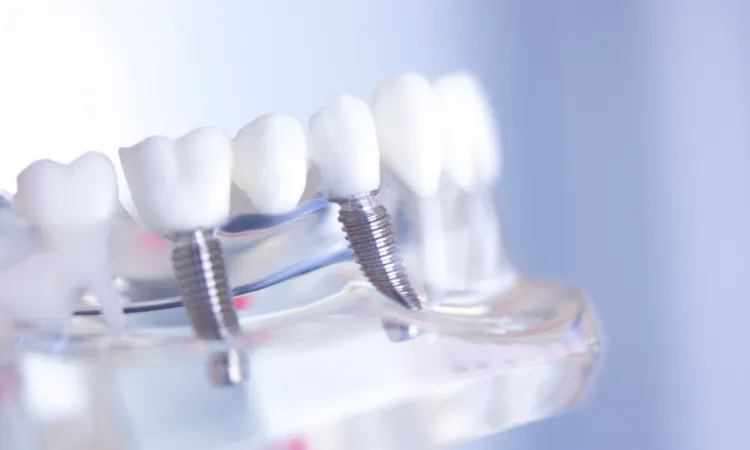
With angled implants, we tilt the back implants so they anchor into the denser bone that’s still there. Instead of fighting the anatomy, we work with it. This often means we can place implants without a graft, even in jaws that look borderline on an X-ray.
What All-on-4 Does Differently
All-on-4 takes the angled implant idea and applies it to a full arch. Four implants support an entire row of teeth. The two back implants are angled. The two front implants are usually placed straighter.
Because the back implants lean into stronger bone, patients who were told they’d need full dentures often qualify for a fixed, permanent solution instead.
Dr. Cappy Sinclair plans every All-on-4 case with 3D imaging at our Virginia Beach office. This lets him see exactly where the bone is thickest and angle each implant for the best possible hold. Our team also includes an oral and maxillofacial surgeon who weighs in on complex cases, so surgical decisions get extra expertise.
What “Enough Bone” Actually Means
Here’s the part most patients never hear explained. “Enough bone” isn’t one fixed number. It depends on where the implants go, how they’re angled, and how many are needed.
A jaw that’s too thin for four straight implants might be perfectly fine for four angled ones. A patient who was told ten years ago that they weren’t a candidate might qualify today because the technique has improved.
That’s why we don’t rely on old X-rays or a quick glance. We take fresh 3D images and evaluate your actual anatomy. The answer is specific to you, not to a rule of thumb.
When You Do Need a Bone Graft
We won’t pretend bone grafting is never needed. Sometimes it is. If bone loss is severe enough, even angled implants won’t have enough to hold onto. In those cases, a graft can rebuild the foundation, and we revisit implants afterward.
Because we have an oral and maxillofacial surgeon on our team, we do grafting in-house. You won’t drive to a different office or juggle separate providers. Same building, same team, same records.
And if grafting still isn’t enough, we’ll tell you honestly and walk you through other options like implant-supported dentures or traditional dentures.
Why This Matters for Patients in Virginia Beach
If you’ve been living with missing teeth or uncomfortable dentures, you may have accepted that implants just aren’t for you. That conclusion may be based on outdated information.
Patients from Chesapeake, Norfolk, Suffolk, and across Hampton Roads come to our Virginia Beach office after being told no somewhere else. Some of them leave with a treatment plan. Some leave with a different plan than they expected. But they leave knowing the truth about their options, not a guess.
How to Find Out if Angled Implants Could Work for You
The only way to know is to get evaluated with current imaging and an honest conversation. That’s what a consultation at our Virginia Beach office is for.
You’ll get a full exam, 3D scans, and time with Dr. Sinclair to review what your bone actually looks like and what it can support. If angled implants or All-on-4 could work, we’ll show you how. If a graft is the better path, we’ll explain why. We’ll tell you if implants aren’t right for you too.
Don’t let an old answer keep you from a new one. If you were told you don’t have enough bone for implants, contact Coastal Cosmetic & Implant Dentistry to schedule a consultation. Let’s review your anatomy and give you a real answer. Call us at 757-656-6368, or request an appointment online.
Learn more about our implant dentistry:
- Dental Implants in Virginia Beach
- Multiple Dental Implants
- Single Dental Implants
- Dental Implants Under One Roof
- Benefits of All-On-Four Implants
- Cost of Dental Implants
- Dental Implants vs Dentures
- Teeth-In-A-Day
- Dental Implant FAQs
- All-on-4 Dental Implants Norfolk, VA
- All-On-Four Dental Implants Chesapeake, VA
- All-On-Four Dental Implants Suffolk, VA
- Dental Implants Chesapeake, VA
- Dental Implants Norfolk, VA