
All-on-4 dental implants have a success rate of around 98%! But like any surgical procedure, there are risks you should know about.
At Coastal Cosmetic & Implant Dentistry in Virginia Beach, Dr. Cappy Sinclair helps patients understand these risks and take steps to avoid them. They use advanced technology and careful planning to minimize complications and give you the best possible outcome.
We proudly serve patients from Virginia Beach, Chesapeake, Norfolk, Suffolk, and all surrounding communities.
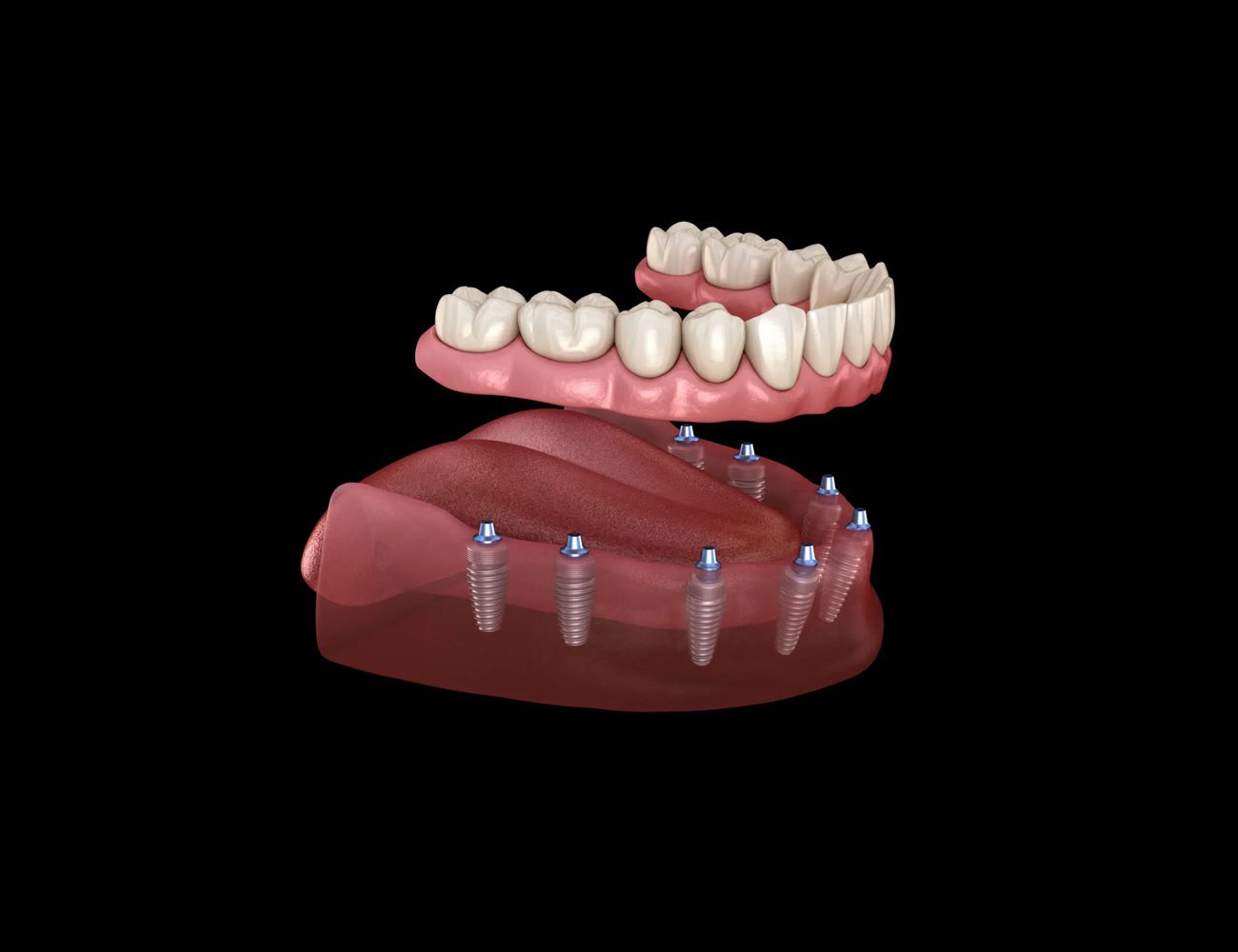
The Most Common All-on-4 Complications
Implant Failure
Implant failure happens when the titanium post doesn’t fuse properly with your jawbone, a process called osseointegration. Without this bond, the implant becomes unstable and may need removal.
Signs of implant failure include:
- Pain around the implant site
- Swelling in your gums
- A loose or shifting prosthesis
- Infection
Early failure occurs within the first 3 to 6 months and usually results from problems with osseointegration. Late failure happens after your final restoration is placed and is linked to infection or excessive bite forces.
The overall failure rate for dental implants is generally around 5 to 10 percent. This risk increases with poor health habits, smoking, or inadequate bone density.
Peri-Implantitis
Peri-implantitis is a gum infection that develops around the implant. It causes inflammation and bone loss and, if left untreated, can lead to implant failure. It’s like gum disease but happens specifically around implant sites.
Signs include:
- Bad taste or bad breath
- Bleeding around the implant
- Pain and swelling
- In severe cases, pus discharge or fever
The biggest risk factors are poor oral hygiene and smoking. Bacteria that caused your original gum disease can return and damage your implants the same way they destroyed your natural teeth.
Prosthesis Breakage
The bridge attached to your implants isn’t indestructible. Acrylic bridges, sometimes called hybrid restorations, are particularly prone to cracking and wear. The plastic teeth can chip or fracture off within just a few years.
Zirconia bridges are more durable, but even these can fracture if the bridge is too thin or if you grind your teeth. Screw loosening is another common issue. The small screws holding the bridge to the implants can loosen over time, especially if bite forces are uneven.
Bone Loss and Gum Recession
Some patients experience bone loss or gum recession around implant sites after All-on-4 surgery. When gums pull back, the metal components of the implant or abutment can become visible. This creates both an aesthetic problem and a structural one.
Patients with naturally thin gum tissue are at higher risk. Some require a gum graft before or after implant placement to prevent or address this problem.
Bite Problems
If implants aren’t placed at the correct position or angle, your bite can feel off. Uneven bite pressure can lead to jaw pain, clicking sensations, and accelerated wear on the prosthesis. In some cases, you may need to remake the bridge entirely.
This is one of the strongest reasons to choose an experienced implant provider with advanced planning technology. Proper 3D imaging and digital treatment planning greatly reduce the risk of alignment errors.
Speech Changes
Because the All-on-4 bridge is a single fixed structure, some patients find it feels bulkier than natural teeth, at least initially. This can temporarily affect pronunciation, causing a slight lisp or change in speech patterns.
For most patients, this resolves within a few weeks as the mouth adapts. In rare cases, a speech therapist may help.
Food Trapping
Traditional teeth are individual. All-on-4 gives you a connected bridge, which means there is a gap between the bridge and your gum line where food can collect. Cleaning under and around the bridge requires more effort than brushing regular teeth.
Patients who don’t routinely clean under their bridge face a much higher risk of infection. Special tools like water flossers and interdental brushes are necessary for daily oral care.
How to Minimize Your Risk
Choose an Experienced Provider
The surgeon’s experience is the most important factor for long-term success. Dr. Cappy Sinclair is a member of the American Academy of Cosmetic Dentistry. He has advanced training and years of experience placing All-on-4 implants.
Ask your surgeon to see results from 15 to 20 years ago. A dentist who has done this routinely for a longer time has a higher success rate.
The lab making your bridge can also make or break your treatment’s success. The lab fabrication process involves many steps. It’s like building a complex architectural structure. One mistake can cause problems years later.
Quit Smoking
Smoking is the single biggest risk factor you can control. Smokers face implant failure rates two to three times higher than non-smokers. Nicotine restricts blood flow to healing tissue, reduces osseointegration completeness, and increases late peri-implantitis risk.
Vaping carries similar risk and should be treated the same way. Quitting before surgery and staying off nicotine through the healing period substantially closes the gap with non-smokers.
Manage Your Health Conditions
Uncontrolled diabetes impairs healing, alters bone metabolism, and increases infection risk. Patients with HbA1c under 7 percent have outcomes comparable to non-diabetic patients. If you have diabetes, work with your medical team to get your blood sugar under control before surgery.
Osteoporosis and osteopenia are also significant risk factors for implant failure. Patients with osteoporosis or osteopenia have significantly more implant failures. Discuss your bone health with your dentist before starting treatment.
Treat Gum Disease First
If you have a history of gum disease, treating it before getting implants is essential. Active periodontal disease at the time of placement raises long-term peri-implantitis risk because patients with active gum infection carry that bacterial environment forward.
Coastal Cosmetic & Implant Dentistry’s protocol is to treat active periodontal disease and confirm tissue stability before proceeding. This foundation separates favorable long-term outcomes from compromised ones.
Follow Post-Operative Instructions
Your dental team will provide guidelines for looking after your All-on-4 dental implants in Virginia Beach. Following these guidelines supports your recovery and helps your implants last longer.
Key instructions include:
- Stick to a soft diet during the first few months
- Avoid smoking and alcohol
- Keep your mouth very clean
- Attend all scheduled follow-up appointments
- Take prescribed medications as directed
Maintain Excellent Oral Hygiene
All-on-4 teeth require the same maintenance and care as natural teeth. They need regular brushing and flossing to prevent plaque buildup, which can lead to gum disease.
Tips for maintaining your All-on-4 implants:
- Clean your teeth twice daily with a soft-bristle toothbrush
- Floss daily to prevent plaque buildup between your teeth
- Use a water flosser to clean under the bridge
- Avoid abrasive toothpaste that may wear down the implant surface
- Get professional cleanings at your regular checkups
Attend Regular Checkups
Attending your checkups as scheduled is important for monitoring your dental implant progress. If issues come up, your dental team can catch them early and help ensure your recovery is going smoothly.
The visit is when peri-implant tissue is monitored, screw torque is checked, the prosthesis is professionally cleaned, and small issues are caught before they become large ones.
What If a Complication Occurs?
If an implant fails to integrate during the initial healing phase, we remove it. We can place a replacement implant either immediately or after a healing period. The remaining three successfully integrated implants may still support a provisional bridge while the replacement implant heals.
Prosthetic complications such as fractures or loosened screws are generally repairable. The bridge can be removed, repaired, or remade, and refitted to the implants. These issues, while inconvenient, don’t affect the implants’ health.
Peri-implantitis is treatable, particularly when detected early. Initial management typically involves professional cleaning of the implant surfaces and improvement of the patient’s home care routine. More advanced cases may require surgical treatment.
Ready to Restore Your Smile?
Dr. Cappy Sinclair has the training and experience to provide safe, predictable All-on-4 results. Your Virginia Beach dental practice uses advanced technology and careful planning to minimize risks and maximize your success.
Contact our Virginia Beach office today at 757-656-6368 or request an appointment online. We proudly serve patients from Virginia Beach, Chesapeake, Norfolk, Suffolk, and all surrounding communities.