
When most people picture someone getting a dental implant, they imagine a grandparent replacing teeth that have simply worn out over time. And sure, that’s a common scenario. But we see plenty of patients in their 30s and 40s who need dental implants too.
Maybe you lost a tooth in a sports accident. Maybe a root canal didn’t hold up. Maybe an old crown finally gave out. Whatever the reason, tooth loss doesn’t discriminate by age. The good news? If you’re younger and missing a tooth, getting an implant now might be one of the smartest decisions you’ll ever make for your long-term health.
Your Teeth Do More Than Chew
Your teeth do more than just chew food. They actually stimulate your jawbone every time you bite down. That stimulation tells your body, “Hey, we need this bone right here. Keep it strong.”
When you lose a tooth, that stimulation stops. Your body figures the bone isn’t needed anymore and starts breaking it down. This is called bone resorption, and it’s completely painless. You won’t even know it’s happening.
The Domino Effect of Missing Teeth
Over a few years, the bone in that area thins out and shrinks. The teeth next to the gap start shifting into the empty space. Your bite changes. You might start favoring one side when you chew.
It’s a domino effect. One missing tooth leads to shifting teeth, which leads to a misaligned bite, which can lead to jaw pain, uneven wear, and even more tooth loss down the road.
How an Implant Stops the Cycle
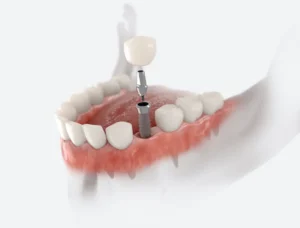
An implant stops all of that. It puts a titanium post into your jawbone that acts just like a natural tooth root. That post stimulates the bone, keeping it strong and healthy. It holds the space open, so your other teeth don’t drift.
An implant doesn’t just replace a missing tooth. It protects every other tooth in your mouth.
You’re Investing in Your Future Self
We know implants aren’t the cheapest option upfront. We get it. A bridge or a partial denture might look cheaper on paper. But the cheap options don’t last.
A typical dental bridge might need replacement every 5 to 10 years. A partial denture can wear out even faster. And every time you replace one, you’re paying again. Add up those costs over 30 or 40 years, and suddenly that implant starts looking like a pretty good deal.
Meanwhile, an implant can last 20 years, 30 years, or even a lifetime with proper care. You pay once, and you’re done. That’s real value.
Plus, a bridge or denture doesn’t stimulate your jawbone either. The bone keeps shrinking. Eventually, you might not have enough bone left to support anything. Suddenly those “cheaper” options aren’t even options anymore.
The Emotional Side Matters Too
Tooth loss at a young age can take a real toll on your confidence. Maybe you’ve stopped smiling in photos. Maybe you cover your mouth when you laugh. Or maybe you’re careful about what you order at restaurants because you don’t want to struggle with chewing.
That stuff matters. Your smile is how you show up in the world. It affects your social life, your dating life, and even your career. Multiple studies have shown that people with confident smiles are perceived as more successful and approachable.
An implant gives you back that confidence. It looks and feels just like a natural tooth. Nobody will ever know it’s not yours unless you tell them.
What Should You Do Next?
If you’re in your 30s or 40s and missing a tooth, don’t wait. The sooner you address it, the more bone you’ll have to work with. That makes the procedure simpler and more predictable.
At Coastal Cosmetic + Implant Dentistry, we specialize in helping people of all ages rebuild their smiles. Dr. Mark Reichley is a Fellow in the International Congress of Oral Implantologists. He has the training and experience to get you results that look natural and last for decades.
Call our North Virginia Beach office or request an appointment online. Let’s get your smile back on track.